✨ COMPLIMENTARY SHIPPING | 2026 Fire Horse Alignment

Taste the Silence in a Cup
For many Western friends, tea might just be a teabag dipped in a mug, or a cozy drink mixed with milk and sugar. But in China, tea is an art form with thousands of years of history—a pathway through the senses to inner peace.
The core of Chinese tea culture is not just to quench thirst, but to “Pin” (Savor)—to distinguish and appreciate the details with mindfulness.
1. Pure Art: Why We Don't Add Sugar
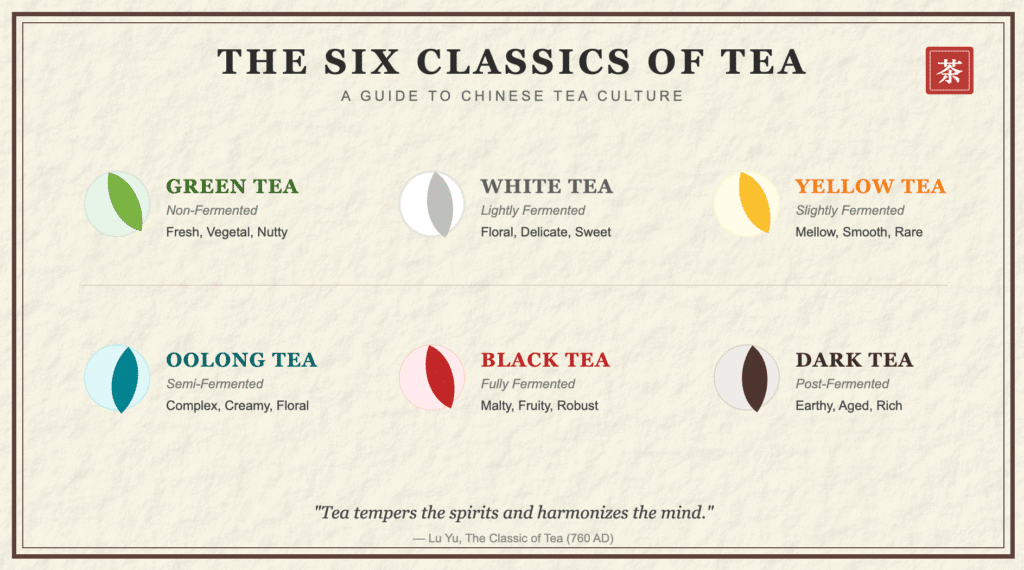
The first lesson of Chinese tea is “Purity.” Unlike English black tea, high-quality Chinese loose-leaf tea is strictly enjoyed without milk, sugar, or lemon. This might sound plain at first, but think of it like Fine Wine Tasting. Only by stripping away the additives can you taste the true “Terroir” (the flavor of the earth).
Green Tea: Carries the fresh aroma of spring grass.
Oolong Tea: Possesses rich notes of orchids or stone fruits.
Pu’er Tea: Holds the grounded, woody scent of time itself.
This insistence on “Original Taste” reflects the Chinese wisdom of returning to nature and simplicity. It is a quiet declaration: Real luxury is natural.
2. Gongfu Tea: The Magic of Time
If you see a Chinese person drinking tea from a cup the size of a walnut, you might be confused. This is the famous “Gongfu Tea” (Kung Fu Tea). Here, “Gongfu” doesn’t mean martial arts; it translates to “Time and Effort.” It means making tea with skill and dedication.
Small Pot, Many Brews: We place a large amount of leaves in a small pot and brew quickly. This allows the same leaves to be steeped more than 10 times.
Changing Flavors: The first steep is the awakening; the second is the rich body; the third is the sweetness… Every steep changes.
This ritual teaches us patience. It forces you to slow down and capture the subtle shifts of time in every sip.
3. The Philosophy of "Hui Gan": Returning Sweetness
Perhaps the most fascinating concept in Chinese tea culture is “Hui Gan” (Returning Sweetness).
When you drink a sip of rich tea, you might feel a slight bitterness at first. But seconds later, a distinct, cooling sweetness rises from the back of your throat and fills your entire mouth.
This is not just a sensory experience; it is a profound Chinese life philosophy: “Bitterness ends, and sweetness begins” (Ku Jin Gan Lai). In our fast-paced modern life, this experience reminds us not to chase instant sensory gratification. The best things in life—like the sweetness of tea—are worth waiting for.
In this cup of clear tea, we drink the spirit of the mountains and water, but what we savor is the calmness of life.